
How Atlanta Discovered Argentina During the World Cup
For Argentina, the 2026 FIFA World Cup offered an exceptional platform to connect with people through one of the country’s most powerful expressions of identity: football.
The passion surrounding Argentina’s national team creates a remarkable level of engagement that reaches far beyond Argentine fans themselves. In Atlanta, our goal was to build on that connection — not to move away from football, but to use the enthusiasm, emotion and curiosity it generates as a gateway to other dimensions of Argentina that can be equally captivating.
Because there is much more of Argentina to fall in love with.
Its food and wine. Its culture, creativity and talent. Its hospitality and way of life.
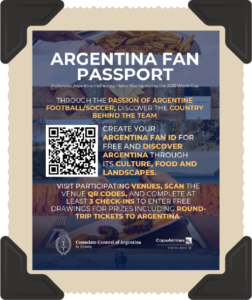 That idea became the Argentina Fan Passport, an initiative of the Consulate General of Argentina in Atlanta designed to create an “Argentina Route” across Metro Atlanta during the World Cup.
Restaurants, hotels, wine retailers, entertainment venues and other local businesses became part of that route. Some already had a strong connection to Argentina; others developed an Argentine-inspired experience specifically for the occasion. Visitors could encounter Argentine dishes, Malbec, choripanes -Argentina’s iconic sausage sándwiches., empanadas, special menus and other experiences while participating in the Passport through registration and venue-specific QR check-ins.
The concept created value in more than one direction.
For us, these local partners provided the physical spaces where people could discover different aspects of Argentina. But for participating businesses, Argentina’s appeal also became an asset: a powerful identity they could leverage to attract new local and international audiences during one of the world’s most visible sporting events.
A restaurant introducing an Argentine dish, a wine retailer showcasing labels from Argentina, a hotel incorporating an Argentine element or an entertainment venue joining the Passport was not simply supporting a country-promotion initiative. Each was also creating a reason for new audiences to walk through the door, engage with the business and potentially return.
That mutual benefit was central to the model.
The project allowed us to take the extraordinary engagement surrounding football and extend it into different spaces across the city. Argentina was present not only through the matches themselves, but also through its gastronomy, wine, hospitality, culture and the businesses and organizations that embraced the initiative.
And we wanted that journey to lead to Argentina itself.
Thanks to Copa Airlines, participants had the opportunity to win round-trip tickets to Argentina. Those prizes were complemented by tourism experiences in the country, including accommodation and other benefits contributed by Argentine partners. Local businesses also added experiences and prizes of their own.
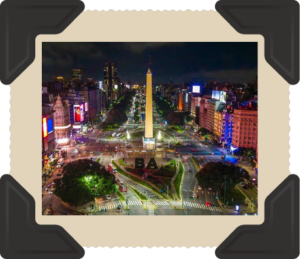 Argentina is a destination of extraordinary contrasts. Travelers can experience the cosmopolitan energy, architecture, gastronomy and nightlife of Buenos Aires; taste world-class wines against the backdrop of the Andes in Mendoza; walk among glaciers and mountains in Patagonia; explore Iguazú Falls and the subtropical landscapes of the Litoral; discover dramatic high-altitude scenery, historic towns and distinctive traditions in the North; or enjoy the sierras, gastronomy and lifestyle of Córdoba.
And geography is only part of the attraction.
Argentina is also the ritual of sharing an asado. A long meal accompanied by Malbec. Mate passed from one person to another. Tango and music. Late dinners and conversations that last longer than expected. Road trips through immense landscapes. Boutique hotels, estancias, wineries and remote lodges. Adventure and nature alongside sophisticated urban experiences.
To capitalize on the momentum created during the World Cup, on July 6 the Consulate organized “Discover Argentina”, bringing together travel professionals and other invited guests for an introduction to Argentina’s regions, gastronomy, tourism experiences and connectivity. Working with Visit Argentina, Copa Airlines and tourism-sector partners, we sought to give those who help shape travel decisions a deeper understanding of what Argentina can offer their clients — and translate World Cup visibility into future travel.
That cultural connection can also become an economic one. In September, Atlanta hosted Argentina Beef Week, bringing Argentine beef exporters together with U.S. importers, distributors and foodservice companies — another example of how something deeply associated with Argentina can become a platform for new connections and business opportunities.
And the opportunity does not end with tourism and gastronomy.
One of the broader objectives of country promotion is to create familiarity — because familiarity can open many different doors.
A person may first encounter Argentina through football, food or wine and later decide to travel there. A local business may participate in an Argentine activation and discover a supplier, entrepreneur or potential commercial partner. A professional connection may evolve into a business relationship. And a company that becomes more familiar with Argentina may eventually explore investment opportunities, identify talent, establish partnerships, open an office or expand its operations in the country.
The same is true of academic and professional exchanges. Students, young professionals and researchers who spend time immersed in another society develop friendships, networks and an understanding of how that country works that is difficult to reproduce from a distance.
Those experiences can matter years later. A study-abroad student may return as an entrepreneur, executive, investor, researcher or customer. Academic relationships can evolve into professional ones. Familiarity lowers barriers, builds trust and makes future connections easier.
And critically, this is a two-way street.
Promoting Argentina in the United States does not mean thinking only about what Americans can discover in Argentina. It also means helping Argentines discover the opportunities that exist here.
 That is particularly true in the U.S. Southeast, a region with global companies, leading universities, strong logistics and transportation networks, dynamic innovation ecosystems and growing markets that still offer considerable untapped potential for Argentine businesses, entrepreneurs and institutions.
That may be one of the most important lessons of the experience. Country promotion becomes stronger when governments, airlines, businesses, entrepreneurs, tourism operators, universities, restaurants, cultural organizations and local partners identify opportunities to work together and create value for one another.
And those connections do not necessarily remain within the sector where they began.
The World Cup gave Argentina an exceptional platform and an extraordinarily engaged audience. Our objective was to build from that strength — extending the connection people already feel through football toward everything else Argentina has to offer, while also creating new pathways for Argentines to discover this region.
Ultimately, that is what stronger international relationships are built on: more connections, more bridges, more discovery — and more opportunities in both directions.
Come for the fútbol. Stay for the country.
