
 The phrase ‘Sustainable Tourism’ gets thrown around by many people in reference to many places, but what does it really mean? Taking immediate action, limiting the number of tourists, and protecting the product well into the future is how Niue defines this. Big steps have been taken to maintain this soft adventure destination – the way things used to be, the way things should be – with world class experiences around every corner of this pristine island nation.
Niue is classed as the world’s only ‘dark sky nation’ with unbelievable stargazing in pure clear skies on offer, but it is the ocean that the economy of Niue is firmly centred around. From an important food source for locals, to tourism generated income, the country needed sustainable actions to protect the ocean for future generations, of the small population of just 1600 people.
In response to this, Niue became one of the first countries to commit to protecting 100% of waters in its exclusive economic zone (EEZ) as a Multiple-Use Marine Park. The Niue Nukutuluea Marine Park covers a huge 317,500 square kilometres and breaks into five tightly managed marine resource use zones where 40% is fully protected as a no-take area. These efforts are a culmination of many years of scientific assessment, community consultation, and cost-benefit analysis; and has been inspired by over 1,000 years of traditional knowledge, practice, and respect for the ocean. This project is managed by a private and public funded group called Niue Ocean Wide (or NOW).
Funding for the Marine Park is through a sponsorship system called Ocean Conservation Commitments (OCC’s) which is an innovative financing mechanism. Anyone can sponsor 1 square kilometre of Niue’s ocean waters for 20 years for a NZ$250 donation. This simple idea won the ‘Nature’ category of the Fast Company’s 2024 World Changing Ideas Awards. National Geographic has followed this project closely and have been documenting the growth in the fish life and biodiversity, with astonishingly positive results. They produced a documentary called “Protecting Paradise” to capture this significantly positive change.
Niue’s focus is on striking a fundamental balance between economic prosperity and environmental sustainability, through promoting low-impact tourism over commercial and industrial fishing and this is where ocean-based experiences on offer, (which Niue has a lot of) blend with sustainable practices.
As an example, fishing from tourism provides much more money for Niue per kilogram of fish caught than any commercial fishing could. Most of the fish you will eat from the island’s restaurants has been line caught locally from one of the charter operators, or even the local vaka (fishing canoe) and the local fishermen also bring back food for their families and community. Chances are high that your lunch came out of the ocean that morning and was caught just a few hundred metres off the land, as the depths needed for pelagic species are extremely easy to access due to Niue being a large coral atoll – it drops around a metre every metre. While commercial fisheries pay license fees, visitors spend money on the fishing charter, accommodation, travel, dining out and retail purchases over the course of their time in Niue.
A few years ago, the export of Uga (coconut crab) was banned. This has seen the population of these giant land-based crabs thrive, and Niue is now one of the few places left in the world where you can legally hunt and also eat this delicacy as the natural balance is now back in order. The Uga are in the forest areas close to the shore and local guides will take you (often at night) to find these giants attached to coconut baits the tie to the jagged coral rocks.
Always close by to the villages that are scattered around this large island, are bush plantations where the self-sufficiency is still practiced. Many locals will welcome visitors onto their plantations where they can experience a wide variety of organic produce – a fascinating experience.
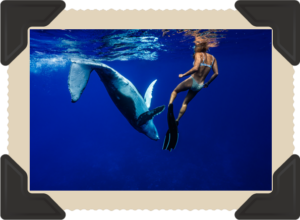
Other popular activities include snorkelling, diving, whale and dolphin interactions (from the land as well as on or in the water), and walking the various sea tracks that take you to a multitude of secret swimming caves, chasms, and pools that you will often have all to yourself and are still in perfect sync with nature.
Niue Blue is the local dive operator and has a collection programme removing Drupella Snails from Niue’s coral reef. These snails devastate the coral, which in turn upsets the eco-system balance. The eradication programme has removed more than 55,000 of these pests and the overall health of the reef is improving as a result. Once counted, the snails are then either given to village elders to consume or to local craft makers who make pendants out of the shells – so nothing is wasted. Another major focus is the restoration of coral and planting of coral nurseries following cyclone damage, or due to other environmental pressures, and experienced divers visiting Niue are often welcome to assist.
Niue’s untouched tropical forest is home to, arguably, the luckiest bees in the world. Free from chemicals, disease, and parasites, these bees flourish while colonies around the world are significantly diminishing. It is not just honey that is at stake here – bees play a crucial role in pollinating a third of all the food we eat. Niue developed the Pacific Bee Sanctuary to protect these special bees and safeguard the future of global colonies by helping to repopulate the world’s hives with strong, healthy queen and honeybees. Niue houses what is believed to be the earth’s last-known sufficiently isolated, disease and parasite-free honeybee population. It is the only honey allowed to be brought into New Zealand because of this purity.
If you are looking for a soft adventure holiday destination where conservation is at the heart of your experience, then jump on a short three-and-a-half-hour flight from Auckland to the world’s largest coral atoll and support Niue’s efforts while enjoying an adventure like nowhere else on the planet. The way life used to be, the way life should be.
